
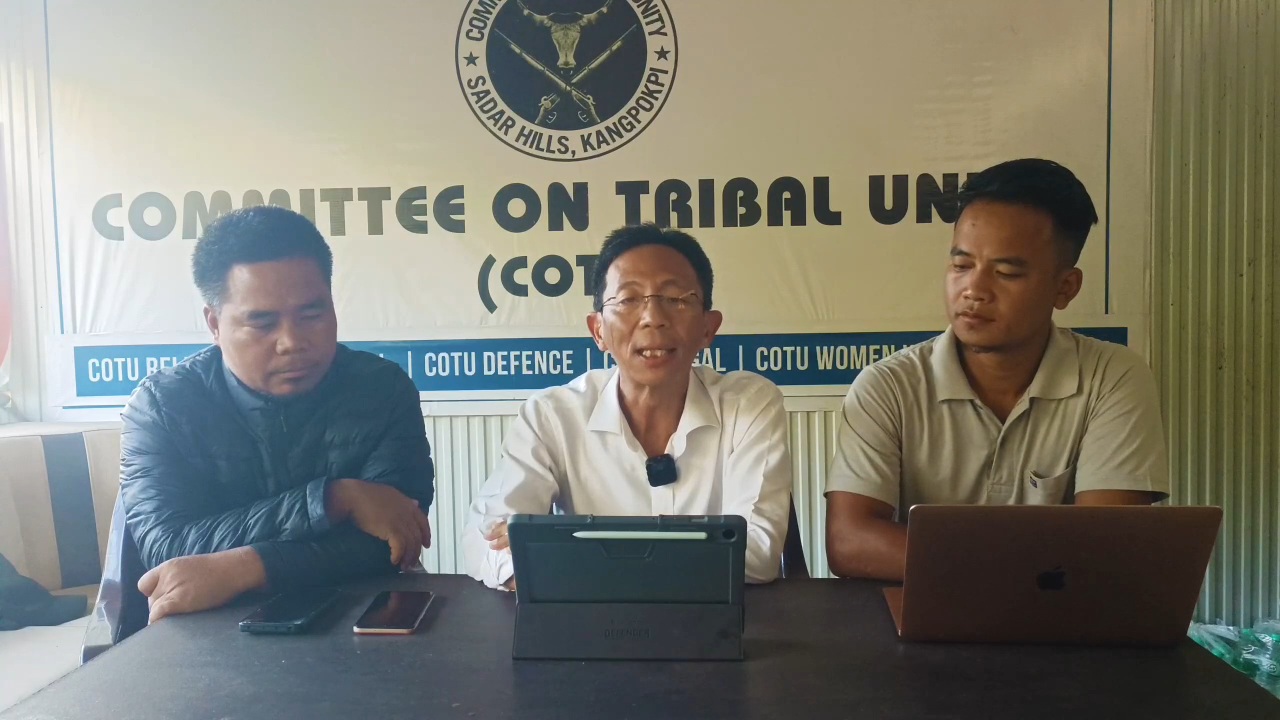
Amid Shutdown, CoTU Alleges ‘Selective Action’, Warns Peace Efforts Will Fail Without Impartiality
The Committee on Tribal Unity (CoTU) on Wednesday accused security forces of biased and selective action in Manipur, alleging that their response to security concerns differed depending on the community affected, as a 24-hour total shutdown paralysed normal life across Kangpokpi district.
CoTU spokesperson NG Lun Kipgen made the allegations during a press conference held in connection with the shutdown, which began at midnight on Tuesday to protest what the organisation described as the biased and selective conduct of security forces since the formation of the popular government in the state.
The shutdown brought business establishments, private institutions, educational institutions and vehicular movement to a standstill across Kangpokpi district, severely disrupting normal life.
No untoward incident was reported during the shutdown, which is scheduled to conclude at midnight on Wednesday.
While expressing anguish over the killing of three Meitei civilians in the Khongbal-Khamenlok incident on October 19 and condemning such violence, Kipgen questioned the preparedness of security forces and the commitment of the police to addressing public grievances.
He alleged that while authorities responded to the sentiments of the Meitei community, they remained indifferent to Kuki-Zo concerns over the razing of Chassad village and delayed deployment of security forces in vulnerable areas.
Kipgen cited alleged security failures in Noney, Kamjong, Ukhrul and the recent incident at Monghing, claiming that delayed deployment and inadequate security had resulted in the killing of Kuki-Zo civilians, including pregnant women and children.
Reminding the Centre and the state government of the Kuki-Zo community’s support for the formation of the popular government, the CoTU spokesperson said the decision was guided by faith in the Constitution of India despite what he described as three years of ethnic persecution.
He warned that efforts to restore peace and normalcy would remain meaningless if policies perceived as favouring one community over another continued to shape political discourse.
“The hard-earned effort for restoration of peace and civility would remain meaningless” unless the alleged policy of appeasement was abandoned, Kipgen said.
Appealing to people in both the hills and the valley, he cautioned against what he described as deliberate attempts to undermine dialogue between the warring communities and prolong the conflict for vested political interests.
He urged the public not to fall prey to propaganda or divisive ideologies, stressing the need for restraint and a commitment to peaceful coexistence.